
Babyproofing conversations tend to cover outlets, cabinet locks, and stair gates almost automatically as a matter of course, but candles rarely make the list at all, even though a lit flame is one of the more immediately dangerous objects a curious toddler can encounter in an ordinary living room.
Why Candles Fall Through the Babyproofing Checklist
Most standard babyproofing advice out there targets permanent household fixtures — the things that are always present and always dangerous in the same fixed way. A candle is different: it’s temporary, it moves around the house, and it’s often only lit occasionally, which makes it easy to mentally file as a special-occasion risk rather than something requiring the same systematic thinking as a stair gate or an outlet cover. That gap between how it’s treated and how genuinely dangerous it is in the moment is exactly why it deserves deliberate attention rather than being handled by instinct alone.
What Actually Makes This Different From General Candle Safety
General candle safety assumes a rational adult evaluating risk. A young child doesn’t operate that way — a bright, moving flame is genuinely fascinating rather than obviously dangerous from a toddler’s perspective, and a child’s instinct to reach toward something interesting isn’t tempered by an understanding of heat or fire the way an adult’s is. This means “keep it out of easy reach” needs a meaningfully higher bar in a home with young children than in one without — not just above where a toddler can reach standing, but above where a toddler can reach after climbing onto nearby furniture, which children do more readily and more often than most parents expect.
Climbing Changes Every Height Calculation
A shelf that’s genuinely, safely out of reach for a child standing flat-footed on the floor is often still well within reach the moment a nearby chair, ottoman, or low bookshelf gets used as an improvised step. This is worth walking through deliberately rather than assuming: stand in the room and actually trace what’s climbable near any candle location, not just what’s tall in isolation. Furniture placement genuinely matters just as much as candle placement itself here — a candle on a “high enough” shelf right next to a climbable piece of furniture isn’t actually high enough at all.
Tablecloths and Runners Are an Underrated Risk
A candle sitting on a tablecloth or table runner that hangs down low enough for a curious toddler to easily grab creates a real, quite specific hazard that’s easy to overlook entirely: a child pulling on the fabric doesn’t need to reach the candle directly at all, since pulling the cloth brings the candle down to them. This is worth checking specifically in any home with young children — either remove hanging table linens entirely from surfaces holding candles, or make sure nothing on that surface could be pulled down by a toddler-height tug on the fabric.
Matches and Lighters Need Their Own Separate Plan
Beyond the lit candle itself, the actual tools used to light it in the first place are a genuinely distinct hazard that deserves fully equal attention — a lighter or a box of matches left on a coffee table or kitchen counter is genuinely dangerous in a home with young children, independent of whether any candle is currently burning. Long-neck lighters and matches should be stored the same way any other genuinely dangerous household item is stored: in a location a child can’t access and, ideally, can’t even see as part of the normal visible household routine.
Supervision Needs to Mean Actual Line of Sight
“Supervised” in the specific context of a young child and a lit candle burning nearby needs to genuinely mean being physically in the same room, with actual attention on the child, not just technically present while distracted by a phone, a conversation, or another task. Young children move genuinely fast and quite unpredictably, and the amount of time between “everything fine” and “reaching toward the flame” can be shorter than most adults intuitively expect, especially with a mobile toddler who’s recently learned to walk or climb and is actively testing the boundaries of what’s newly possible for them.
Guest Visits Reset the Whole Equation
A home without young children living there full-time, but that hosts visiting kids occasionally — grandkids over for the weekend, a friend’s toddler, a big holiday family gathering — needs to run through this same checklist before the visit, not treat it as only relevant to homes with children living there full-time. It’s an easy category of risk to overlook precisely because the household’s normal, everyday habits don’t account for a child’s presence, which means the usual candle placements that are perfectly safe day to day may not be once a visiting toddler is actually in the house and exploring an unfamiliar space.
Older Kids Need a Different Conversation, Not Just Higher Shelves
Once children reach an age where they’re old enough to understand basic cause and effect reasoning, physical placement alone stops being the only real lever available, and a direct, age-appropriate conversation about why candles matter becomes genuinely useful — not a scary lecture, just plain information about heat, fire, and why it’s not a toy, delivered the same straightforward way other household safety rules get explained. Kids who understand the actual reason behind a rule tend to respect it more consistently than kids who only know “don’t touch that” without any explanation attached.
Flameless Candles Solve the Whole Problem for Certain Ages and Spaces
For a young child’s own bedroom or playroom specifically, or really for any household with a very young or unusually curious, hands-on toddler currently passing through an intensely exploratory phase, switching entirely to battery-operated flameless candles removes the actual fire risk from the equation rather than just managing it. This isn’t a compromise or a lesser option — many good flameless candles now genuinely replicate a realistic, gently flickering flame and even carry a light, pleasant scent of their own, closely approximating the actual ambiance of a real candle without carrying any of the underlying fire risk that makes this entire page necessary in the first place. It’s worth treating as the default for a child’s own space rather than a fallback only considered after a scare.
What to Do If a Child Does Get Too Close
Despite every precaution, it’s worth having an actual plan rather than discovering one in a panicked moment. If a child reaches toward or touches a lit candle, the immediate priority is moving them away from the heat source first, before assessing anything else. For any burn beyond the most minor, briefest contact, cool running water on the area for several minutes is the standard first response, followed by medical attention for anything beyond a small, superficial mark. Knowing this in advance, rather than trying to figure it out for the first time in a genuinely panicked moment, measurably shortens the actual response time that matters most in the first few minutes of any real burn injury.
Involve Older Siblings in the Household Rule, Not Just Parents
In households with a range of ages under one roof, an older sibling is very often the one actually present in a room with a younger child for real stretches of unsupervised time throughout a normal day, and candle safety rules that only get communicated to the adults in the house leave a real gap during exactly those windows. Making sure older kids old enough to understand the reasoning also know the household’s specific candle rules — not just “ask a grown-up,” but the actual reasoning behind why — extends the safety net to cover the hours parents genuinely can’t be watching directly themselves.
A Practical Walkthrough Before Lighting Anything
Before lighting a candle in a home with young children present, run through it deliberately: genuinely out of reach even accounting for climbing, no hanging tablecloth or runner underneath it, matches and lighters stored separately and securely, and an adult actually present and attentive for the entire time it burns, not just nominally in the house somewhere. This takes under a minute once it’s a habit, and it’s the single most effective thing separating “candles and young kids coexist safely” from “candles and young kids coexist by luck.”
None of this needs to feel like a reason to give up candles entirely for years while raising young children. The real, actual gap between a household that genuinely manages this well and one that doesn’t isn’t candle ownership itself at all — it’s whether these specific, concrete habits get built early and stay consistent, rather than being treated as a one-time lecture that fades into background noise within a few weeks of being said once.
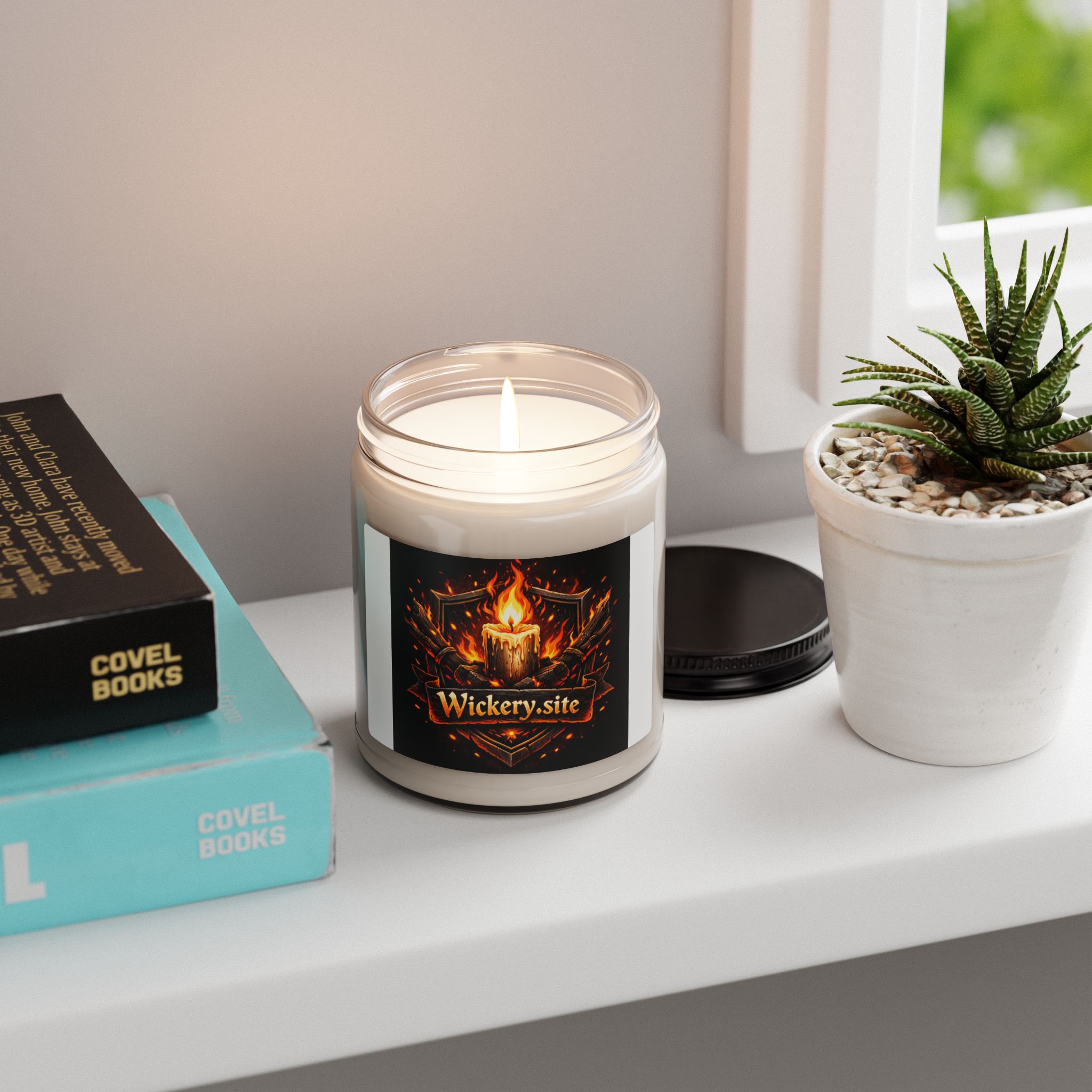
Wickery’s Hearthlight candles come in a sturdy, weighted glass container that’s harder to tip or pull over than a lightweight one — a real, genuinely additional safety margin worth having, though it’s not any kind of substitute for actual thoughtful placement and consistent, attentive supervision around young children.